

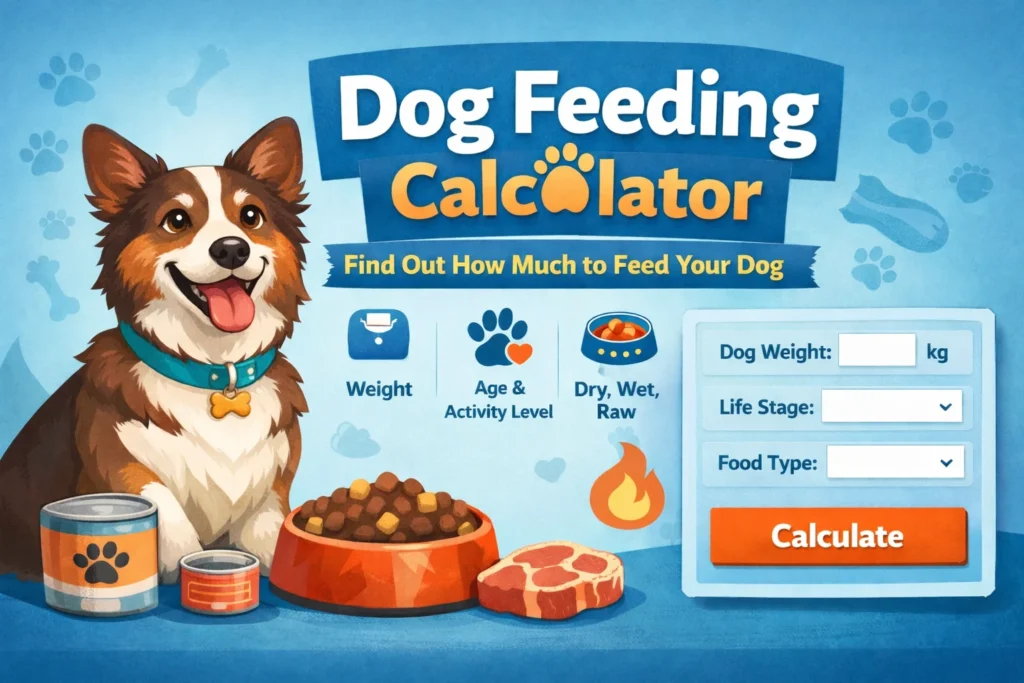
Feeding your dog the right amount every day is essential for their health, energy levels, and long-term wellbeing. Overfeeding can lead to obesity and joint problems, while underfeeding may cause nutrient deficiencies and low energy.
Dog Feeding Calculator
Calculate how much food your dog needs per day based on weight, life stage, and diet type.
The Tailwaves Dog Feeding Calculator helps you estimate how much food your dog needs per day based on their weight, age, activity level, and diet type. This calculator uses veterinary-approved calorie formulas to provide practical feeding guidance you can actually trust.
How Much Should I Feed My Dog Per Day?
There is no one-size-fits-all answer. The correct feeding amount depends on:
- Your dog’s current weight
- Life stage (puppy, adult, senior)
- Activity level
- Metabolism and body condition
- Type of food (dry, wet, or raw)
This is why feeding charts printed on dog food bags are often inaccurate. A feeding calculator gives a personalized estimate, which is far more reliable.
How the Tailwaves Dog Feeding Calculator Works
The calculator is based on the Resting Energy Requirement (RER) formula, commonly used by veterinarians to calculate a dog’s daily calorie needs.
First, it calculates how many calories your dog needs at rest.
Then, it adjusts that number based on your dog’s life stage and activity level.
Finally, it converts calories into actual food portions depending on the diet type you choose.
This method provides a realistic daily feeding amount, not a generic guess.
Dog Feeding Guide by Life Stage
Puppy Feeding Requirements
Puppies need significantly more calories than adult dogs because they are growing rapidly.
- Young puppies often require 2–3 times the calories of an adult dog
- Feed puppies 3 to 4 meals per day
- Portion control is important to prevent rapid weight gain
Adult Dog Feeding
Adult dogs require a balanced calorie intake to maintain a healthy weight.
- Most adult dogs should be fed twice per day
- Neutered dogs typically need fewer calories
- Active dogs may require additional food
Senior Dog Feeding
Senior dogs usually need fewer calories but still require high-quality nutrition.
- Reduced activity lowers calorie needs
- Smaller, more frequent meals may help digestion
- Weight monitoring becomes more important
Dry Food vs Wet Food vs Raw Diet
Dry Dog Food
- Calorie-dense and easy to measure
- Supports dental health
- Most commonly used diet type
Wet Dog Food
- Higher moisture content
- Helpful for dogs that don’t drink enough water
- Typically requires larger portions due to lower calorie density
Raw Dog Food
- Requires precise portion calculation
- Usually measured in grams
- Overfeeding is common if calories are not tracked properly
Always check the calories per serving listed on your dog food packaging and adjust feeding amounts accordingly.
How Often Should You Feed Your Dog?
- Puppies: 3–4 meals per day
- Adult dogs: 2 meals per day
- Senior dogs: 2 smaller meals or more frequent light meals
Consistent feeding times help regulate digestion and prevent overeating.
Signs You May Be Overfeeding or Underfeeding
Signs of Overfeeding
- Rapid weight gain
- Low energy or lethargy
- Difficulty breathing after light activity
- Ribs not easily felt
Signs of Underfeeding
- Visible ribs or hip bones
- Low energy
- Excessive hunger
- Poor coat condition
If you notice any of these signs, adjust portions gradually and consult your veterinarian if needed.
Important Dog Feeding Tips
- Measure food portions accurately
- Avoid excessive treats
- Adjust feeding amounts as activity levels change
- Always provide fresh, clean water
- Monitor your dog’s weight monthly
Frequently Asked Questions
How many calories does a dog need per day?
Daily calorie needs depend on weight, age, and activity level. Small dogs may need 300–500 calories, while large dogs may need over 1,500 calories per day.
Can I feed my dog once a day?
Most dogs do better with two meals per day. Feeding once daily may increase the risk of bloating and overeating.
Should I reduce food after neutering?
Yes. Neutered dogs typically need fewer calories due to slower metabolism.
Is this dog feeding calculator accurate?
This calculator provides a reliable estimate based on veterinary standards, but it should not replace professional veterinary advice.
Disclaimer
This dog feeding calculator is intended for informational purposes only. Every dog is unique, and nutritional needs may vary. Always consult your veterinarian before making significant changes to your dog’s diet.