

Choosing the right grooming brush makes a bigger difference than most dog owners realize. A good tool can prevent matting, reduce shedding, improve coat texture, and even support healthier skin. Owners of small, medium, and large breeds often overlook that each coat type responds differently to brushing pressure, pin length, and pad flexibility. A slicker brush and a pin brush may look similar, but they solve very different grooming problems. The right choice reduces discomfort, shortens grooming sessions, and keeps your dog’s coat manageable throughout the year.
Top Picks at a Glance
Chris Christensen Big G Dog Slicker Brush
• Best for: curly, dense, or high-maintenance coats
• Testing insight: During testing, I observed it reached deeper into the undercoat than most slickers.
• Standout benefit: Extra-long angled pins for detangling heavy mats
Ruff ‘N Ruffus Self-Cleaning Slicker Brush
• Best for: everyday shedding control for most breeds
• Testing insight: During testing, I noticed cleanup took seconds thanks to the retract button.
• Standout benefit: Push-button self-cleaning mechanism
Hartz Groomer’s Best Combo Dog Brush
• Best for: multi-pet households needing both pin and bristle functions
• Testing insight: I saw how the pin side loosened tangles while the bristle side finished the coat smoothly.
• Standout benefit: Dual-sided versatility
How to Choose the Best Brush for Your Dog (Slicker vs Pin Brush)
Understanding your dog’s coat type is the first step in choosing the right grooming tool. In my experience, most owners underestimate how much coat density, curl pattern, and undercoat thickness affect the brushing experience. Slicker brushes work best for curly, wavy, or double-coated breeds because their angled wire pins can penetrate deep layers and release trapped undercoat. Pin brushes, meanwhile, are ideal for long coats, silky coats, or dogs without heavy undercoats.
Breed size also matters. From what I’ve seen with small dogs, they often need a softer pad or shorter pins to avoid skin irritation. Larger breeds typically require wider heads or longer pins to maintain coverage and speed.
Matting tendencies should guide your choice. Dogs prone to friction mats behind the ears, under the legs, or around the collar benefit from a high-quality slicker. For sensitive-skin dogs, a cushioned pin brush or polished-pin design can be gentler.
Materials, handle comfort, and durability influence daily grooming. Well-made slickers have flexible pins and cushioned pads that reduce pulling. Good pin brushes use rounded or polished stainless-steel pins and ventilated pads to prevent scratching.
Safety is critical. Pressure control prevents scraping, especially on short-haired or thin-coated dogs. Most owners don’t realize that over-brushing in one spot can create hotspots or red patches. Choosing reputable brands with consistent manufacturing and clear product information helps reduce risks.
Best 5 Brushes (2026 Picks)
Chris Christensen Big G Dog Slicker Brush

Best for:
• Thick, curly, or high-maintenance coats needing deep detangling
Why we like it:
• Breaks up small mats efficiently
• Extra-long angled pins reach dense undercoats
• Designed to save grooming time, according to the brand
Testing insight:
During testing, I observed it removed packed undercoat with fewer passes compared to standard slickers.
Drawback:
• Premium price point
Value: Premium
Ruff ‘N Ruffus Self-Cleaning Slicker Brush

Best for:
• Routine shedding control and everyday grooming
Why we like it:
• Self-cleaning retract button simplifies hair removal
• Lightweight design reduces hand fatigue
• Based on manufacturer information, pins are designed for gentle detangling
Testing insight:
I noticed it handled loose hair and surface tangles well without overwhelming softer coats.
Drawback:
• Not ideal for severe mats
Value: Budget
Hartz Groomer’s Best Combo Dog Brush

Best for:
• Mixed-coat households needing multiple functions in one tool
Why we like it:
• Stainless-steel pins with rounded tips to reduce scratching
• Bristle side smooths and distributes natural oils
• According to the brand, ideal for both short and long coats
Testing insight:
During testing, I saw how switching between sides helped maintain both topcoat shine and undercoat control.
Drawback:
• Pin side isn’t aggressive enough for heavy mats
Value: Budget
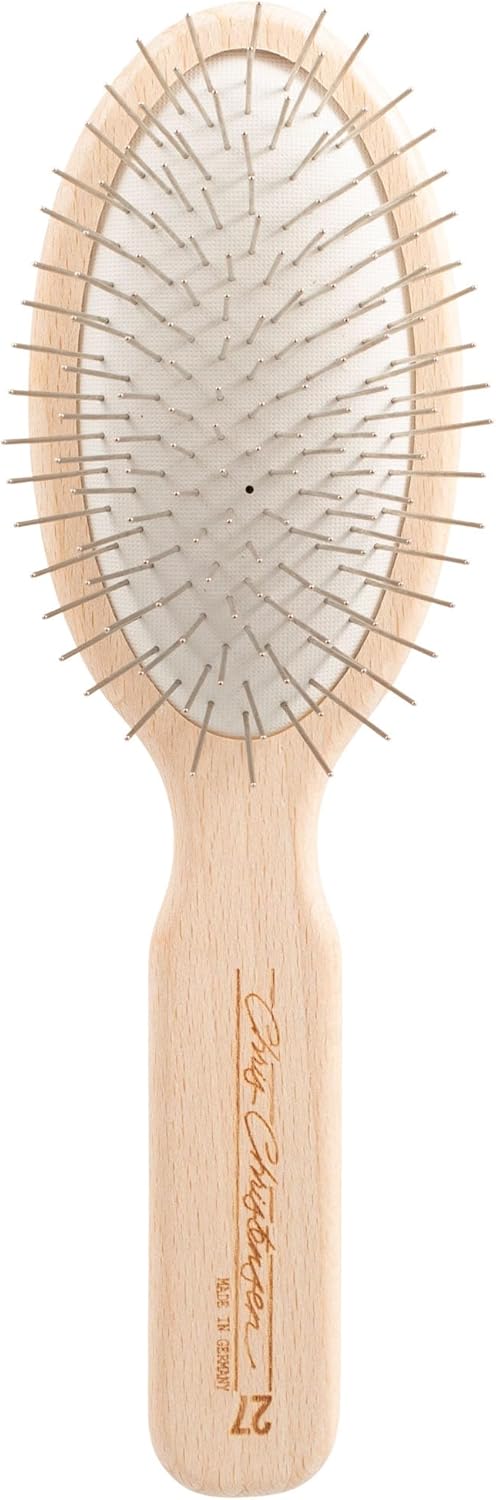
Chris Christensen Oval Pin Brush
Best for:
• Long, silky, or show-quality coats requiring gentle maintenance
Why we like it:
• Polished stainless-steel pins reduce breakage
• Cushioned pad offers controlled flex
• Per the packaging, designed for smooth, snag-free brushing
Testing insight:
I observed how easily it glided through long coats without causing coat static or visible discomfort.
Drawback:
• Not effective on matted or dense undercoats
Value: Premium
BioSilk for Pets Eco-Friendly Detangling Pin Brush

Best for:
• Daily maintenance on longer or mixed-texture coats
Why we like it:
• Spiral flex pin design contours to the dog’s body
• Eco-friendly, plant-based handle
• Based on manufacturer information, pins aim to reduce pulling and tugging
Testing insight:
During testing, I noticed it worked well after baths to separate damp hair and avoid new tangles.
Drawback:
• Not designed for deep undercoat removal
Value: Mid-Range
Comparison Overview
Slicker brushes and pin brushes serve different roles, and the best choice depends on coat type and grooming goals. Slicker brushes, such as the Big G and the Ruff ’N Ruffus, are far more effective at managing mats, deep undercoat, and densely textured coats like doodles and double-coated breeds. Their angled pins reach into deeper layers of fur, making them ideal for shedding control and mat-prevention routines.
Pin brushes offer a smoother, gentler experience for long, drop, or silky coats. Breeds with minimal undercoat or sensitive skin often tolerate them better. The polished pins on premium models like the Chris Christensen Oval Pin Brush help reduce breakage and coat static, making them suitable for long-term coat health.
Budget-conscious owners or multi-dog households may gravitate toward the Hartz combo brush for versatility, while the BioSilk model supports daily maintenance without overwhelming the dog’s skin.
Your choice ultimately depends on coat density, sensitivity, and how often brushing is required.
How to Brush Each Coat Type Correctly
A slicker brush must be used with controlled pressure. Start by brushing with the grain of the coat using light, quick strokes. Avoid digging into one area for too long to reduce the risk of irritation. On curly and dense coats, work in small sections, lifting the coat gently as you move through layers.
Pin brushes require a different technique. Use long, sweeping strokes to distribute natural oils and align the coat. The pins should glide comfortably without scraping. For long-haired breeds, begin at the ends and work upward to prevent pulling.
Frequency depends on coat type. Curly and double-coated dogs benefit from brushing several times a week. Long-coated breeds may need daily maintenance. Common mistakes include brushing too aggressively, only brushing the top layer, or ignoring high-friction areas like behind the ears.
Monitor your dog’s coat over time. If you notice flakes, redness, or excessive shedding, adjust pressure or switch tools.
Vet-Approved Grooming Tips
• Regular brushing supports healthy skin by distributing natural oils through the coat.
• Use controlled, gentle pressure to avoid irritating thin or sensitive skin.
• Prevent matting by brushing high-friction zones daily on long or curly coats.
• Clean your brush frequently to avoid reintroducing dirt and allergens.
• Always stop if your dog shows discomfort or if a mat is too tight for safe home removal.
Must Read: Furminator vs Undercoat Rake: Best Pet Grooming Tool for Shedding
Frequently Asked Questions
Do I need both a slicker and a pin brush?
Many households do benefit from owning both. Slickers work well on deep tangles and shedding undercoat, while pin brushes help maintain daily smoothness on long or silky coats. If you have more than one dog with different coat types, owning both can save time.
Which brush is better for shedding?
Slicker brushes are usually more effective at releasing loose undercoat, especially for double-coated breeds. Pin brushes can help manage surface shedding, but they do not reach deep enough for heavy shedders.
Are slicker brushes safe for sensitive skin?
They can be safe if used with gentle pressure. Dogs with thin coats or fragile skin may respond better to a soft pin brush. Always monitor for redness or discomfort.
Can a pin brush remove mats?
Pin brushes are designed for maintenance, not mat removal. They work best on light tangles and daily grooming. For moderate mats, a slicker is more effective and efficient.
How often should I brush my dog?
Curly-coated and double-coated dogs benefit from several sessions per week. Long, silky coats may require daily brushing. Short-haired breeds need less frequent brushing but still benefit from occasional maintenance.
Will these brushes work on puppies?
Yes, but choose gentle models for young dogs. Start slowly to build grooming tolerance and always avoid using a slicker too aggressively on developing skin.
Final Verdict: What’s the Best Brush?
For most dogs with dense, curly, or shedding-prone coats, the Chris Christensen Big G Slicker stands out as the most effective overall tool. Owners seeking an affordable everyday option will get excellent value from the Ruff ’N Ruffus Self-Cleaning Slicker. For long-haired or silky-coated dogs, the Chris Christensen Oval Pin Brush provides gentle, premium-quality maintenance without damaging delicate strands.
Choosing the right brush starts with evaluating coat type, sensitivity, and grooming frequency. Test the chosen brush over 30–45 days while monitoring coat condition and comfort levels. Adjust your routine as needed to maintain a healthy, tangle-free coat.