



Quick Summary: Top Recommendations at a Glance
If you’re in a rush to solve a tummy trouble or find a budget-friendly kibble, here is the breakdown of our top testing winners. We evaluated these on ingredient density, digestability, and real-world dog feedback.
- Best for Sensitive Stomachs:Blue Buffalo Basics Skin & Stomach Lamb
- Why: Limited ingredients eliminate common triggers for itchy dogs.
- Check offers on Amazon
- Best Overall Nutrition:Wellness Complete Health Lamb & Barley
- Why: Exceptional balance of probiotics and omega fatty acids for coat health.
- Check offers on Amazon
- Best for Picky Eaters:Purina Pro Plan Adult Shredded Blend Chicken
- Why: The texture variety (kibble + shreds) wins over dogs who usually refuse dry food.
- Check offers on Amazon
- Best Value Chicken Formula:Blue Buffalo Life Protection Chicken
- Why: Solid nutrition stats without the boutique price tag.
- Check offers on Amazon
- Best Vet-Recommended Staple:Hill’s Science Diet Chicken & Barley
- Why: Consistent quality control and precise nutrient ratios for long-term health.
- Check offers on Amazon
Pros and Cons of Lamb vs Chicken Dog Food
Before diving deep, it’s helpful to see the trade-offs clearly. In our experience, neither protein is “better” universally—it’s about the biological match for your specific dog.
Lamb Dog Food
- Pros: Often richer in healthy fats (great for skin/coat), considered a “novel” protein for dogs sensitized to poultry, generally very palatable for fussy eaters.
- Cons: Can be higher in calories (risk for overweight dogs), typically more expensive per pound than chicken, slightly lower protein-per-gram density than poultry.
Chicken Dog Food
- Pros: Highly digestible lean protein, contains essential amino acids for muscle building, cost-effective, widely available in almost every formulation (weight management, puppy, senior).
- Cons: One of the most common allergens for dogs, quality varies wildly between brands (watch for “by-products”), sometimes used as cheap filler in “beef” or “lamb” recipes.
Introduction
Picture this: It’s 2:00 AM, and the sound of your dog scratching at their ears or licking their paws wakes you up—again. Or maybe you’re standing in the pet aisle, staring at two bags of kibble, wondering if the $15 price difference between the lamb formula and the chicken formula actually translates to better health.
We’ve been there. At Tailwaves, we know that protein choice isn’t just about flavor; it’s the foundation of your dog’s immune system, energy levels, and gut health. Too many owners assume all meat is created equal, but the biological impact of lamb vs chicken dog food is distinct.
Our approach to product testing is ingredient-first and sensitivity-focused. We don’t just read labels; we look at sourcing, manufacturing transparency, and real-world feeding results. Whether you have a high-drive Border Collie or a bulldog with a sensitive tummy, this guide cuts through the marketing noise to give you honest, practical judgments.
Lamb vs Chicken: Key Nutritional Differences
While both meats provide the essential building blocks of life, their profiles differ in ways that affect digestion and metabolism.
Protein and Fat Levels
Chicken is naturally leaner. It packs a high protein punch with relatively lower fat, making it ideal for muscle maintenance without excess calorie load. Lamb is typically fattier. This isn’t bad—fat provides energy and supports skin elasticity—but it means lamb dog food is often more calorically dense.
Amino Acid Profiles
Both are complete proteins, meaning they contain all essential amino acids your dog needs. However, chicken is particularly rich in tryptophan (linked to mood stability) and lean muscle-building compounds. Lamb offers decent protein but shines in its fatty acid content, specifically when grass-fed.
Digestibility & Allergy Risks
Chicken is highly digestible for a healthy dog. However, because chicken has been the default protein in commercial pet food for decades, many dogs have developed intolerances to it. Lamb is often easier on the gut for these sensitized dogs, not because it’s “magical,” but because their immune systems haven’t been overexposed to it.
When Lamb Is the Better Choice
In our consultations with nutritionists, we almost always pivot to lamb when a dog shows signs of intolerance.
The Allergic or Itchy Dog
If your dog suffers from chronic ear infections, hot spots, or constant paw licking, chicken is a prime suspect. Switching to a lamb dog food eliminates the poultry antigen. Often, we see symptoms reduce significantly within 4–6 weeks of eliminating chicken. [LINK: best dog food for allergies]
The “Gas Clearing the Room” Dog
Digestive volatility—loose stool or lethal gas—often signals that a dog isn’t processing their current protein well. Lamb is often fermented differently in the gut and, being a red meat, can be more soothing for certain digestive tracts that react poorly to poultry proteins.
The Skinny or High-Burn Dog
Because lamb formulas often carry higher fat content, they are excellent for dogs who struggle to keep weight on or working dogs who need sustained energy rather than just quick-burning sugars.
When Chicken Is the Better Choice
Don’t write off chicken. For the vast majority of dogs, it remains the gold standard for lean nutrition.
The Athlete
For agility dogs or high-energy breeds, chicken provides the high-octane protein needed for muscle repair without the heaviness of red meat fats. It’s efficient fuel.
The “Easy Keeper” (Prone to Weight Gain)
If your dog looks at food and gains a pound, chicken is superior. You can feed a satisfying volume of food without blowing the calorie budget, whereas the same cup of lamb kibble might pack 50–80 more calories.
The Budget-Conscious Owner
You can get higher quality chicken ingredients for a lower price compared to lamb. A premium chicken kibble often costs the same as a mid-tier lamb kibble. If budget is tight, a high-end chicken food is better than a low-quality lamb food filled with fillers.
What to Look for When Choosing Lamb or Chicken Dog Food
Ingredient Quality
Look for the named meat as the first ingredient (e.g., “Deboned Lamb” or “Fresh Chicken”). Avoid generic terms like “Meat Meal” or “Poultry Fat,” which mask the source. High-quality formulas will also pair the meat with digestible carbs like sweet potato or brown rice, rather than cheap corn fillers.
Suitability for Age, Breed, and Health
Puppies need specific calcium-to-phosphorus ratios for bone growth. A lamb formula designed for adults might lack the protein density a growing giant-breed puppy needs. Always check the AAFCO statement to ensure the food matches your dog’s life stage.
Digestibility & Sensitivity
If buying chicken, look for “chicken meal” in addition to fresh chicken—it concentrates the protein. For lamb, ensure the fat content isn’t too high (over 18-20%) if your dog has a sensitive pancreas, as rich lamb fat can trigger pancreatitis in prone breeds like Schnauzers.
Brand Transparency & Recall History
We favor brands that own their manufacturing facilities. When a brand outsources to a “co-packer,” cross-contamination becomes a risk. If you are buying lamb because of a chicken allergy, cross-contamination on the production line is a dealbreaker.
AAFCO Compliance
Never buy food that isn’t AAFCO approved for “complete and balanced” nutrition. “Intermittent or supplemental feeding only” means it lacks essential vitamins and is dangerous as a daily diet.
Ingredients or Features to Avoid
Regardless of whether you choose lamb vs chicken dog food, these red flags apply to both:
- “By-Product Meals” (Generic): Chicken by-product meal can be nutritious (organs/bone), but generic “meat by-products” are a mystery mix.
- Hidden Chicken in Lamb Recipes: This is the #1 trap. You buy a “Lamb & Rice” bag, but the ingredient list shows “Chicken Fat” or “Chicken Meal” as the third ingredient. Read the label closely!
- Split Ingredients: Look out for “peas, pea flour, pea protein.” Manufacturers do this to make the meat look like the #1 ingredient, when really, the food is mostly peas.
- BHA/BHT: Artificial preservatives that have been linked to health issues. Stick to mixed tocopherols (Vitamin E) for preservation.
Best Lamb Dog Foods (Top Picks)
#1 Blue Buffalo Basics Skin & Stomach Lamb & Potato
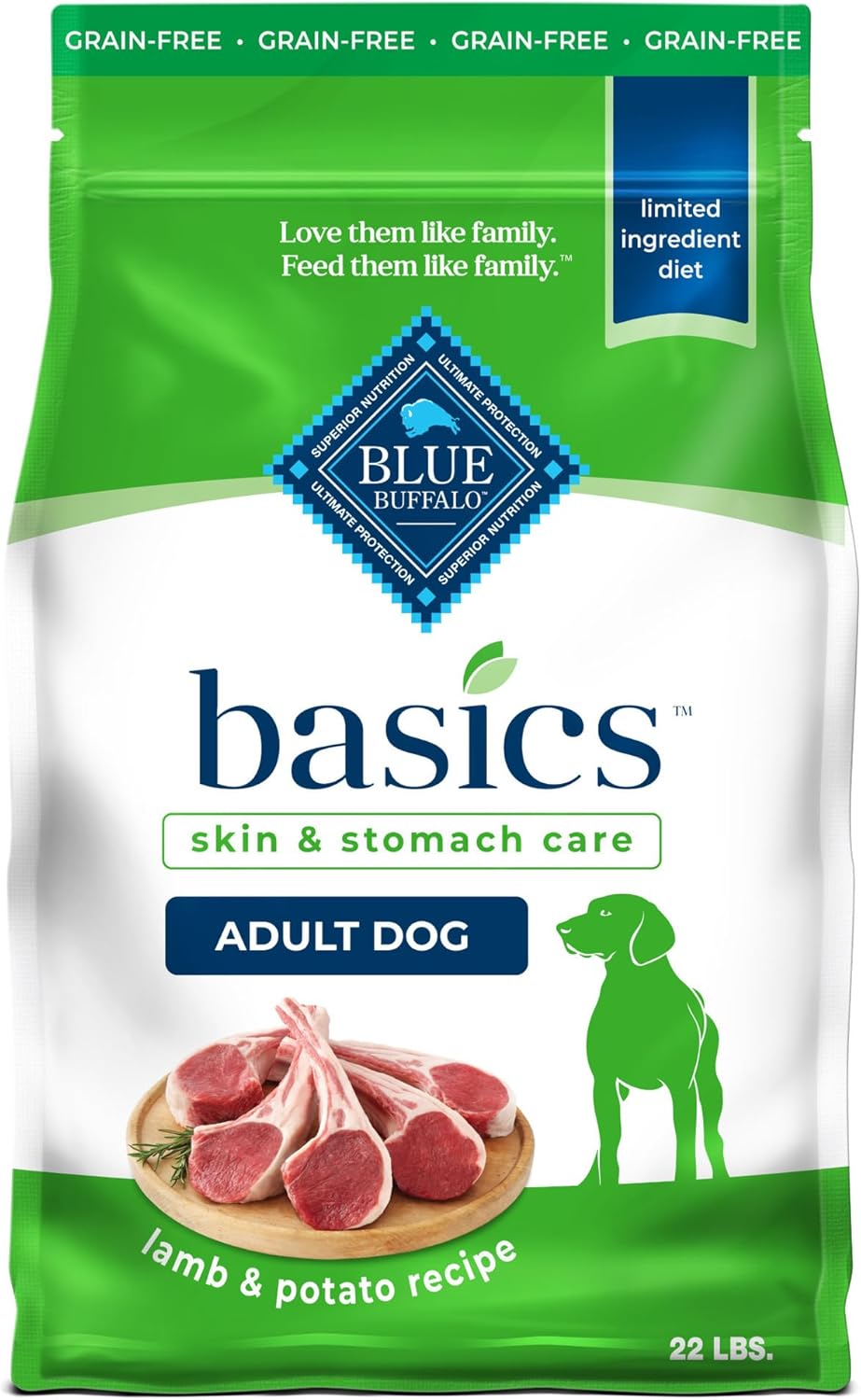
Best For: Dogs with confirmed poultry allergies or severe digestive sensitivities.
Key Features: This is a limited-ingredient diet (LID). It removes chicken, beef, corn, wheat, soy, and dairy. It relies heavily on lamb and easily digestible potatoes.
Tailwaves Insight: We love that they don’t sneak chicken fat in here—they use sunflower oil instead. In our analysis, the kibble size is manageable for most breeds, and the aroma is distinctively meaty without being rancid.
Pros: Truly poultry-free, gentle on digestion, moderate price point.
Cons: Potato-heavy (some owners prefer grains), lower protein (20%) than non-LID foods.
Value: Mid-Range.
#2 Wellness Complete Health Lamb & Barley
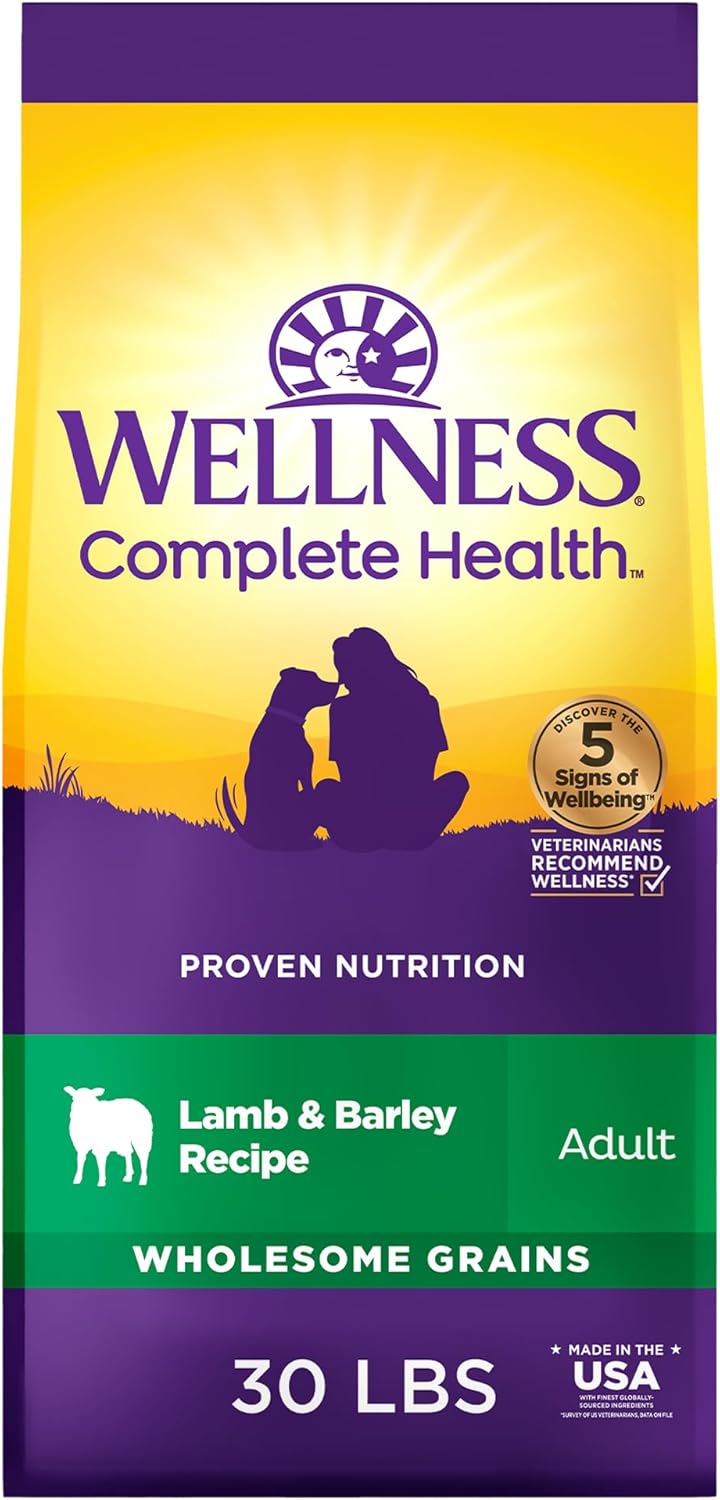
Best For: Owners wanting a holistic, nutrient-dense daily diet for adult dogs.
Key Features: Features premium lamb combined with wholesome grains like oatmeal and barley. It includes probiotics coated onto the kibble after cooking to ensure viability.
Tailwaves Insight: Wellness consistently tests well for coat improvement. The inclusion of flaxseed and salmon oil alongside the lamb makes this a superstar for dry, flaky skin. The protein level (24%) is solid for maintenance.
Pros: excellent omega fatty acid profile, no meat by-products, includes taurine for heart health.
Cons: Contains grains (not for grain-free advocates), slightly higher price point.
Value: Premium.
#3 Instinct Be Natural Real Lamb

Best For: Owners looking to bridge the gap between raw and kibble.
Key Features: The kibble is tumbled with crushed freeze-dried raw lamb, boosting palatability and nutrient retention. It uses no fillers like corn, wheat, or soy.
Tailwaves Insight: This is often the “fix” for picky eaters. The raw coating smells enticing to dogs. We appreciate that it uses lamb meal for density but keeps the ingredient list relatively clean.
Pros: High palatability, freeze-dried raw boost, good protein levels (25%).
Cons: Can be too rich for sensitive stomachs, rigorous storage needed to keep freshness.
Value: Premium.
Best Chicken Dog Foods (Top Picks)
#4 Blue Buffalo Life Protection Chicken & Brown Rice

Best For: The everyday family dog with no specific health issues.
Key Features: Includes their signature “LifeSource Bits”—cold-formed antioxidative pellets mixed with the kibble. Real chicken is the first ingredient.
Tailwaves Insight: This is the “Toyota Camry” of dog foods—reliable, widely available, and gets the job done. It’s a massive upgrade from grocery store brands like Pedigree without the boutique price.
Pros: Great availability, balanced nutrition, includes glucosamine for joints.
Cons: LifeSource bits are sometimes left behind by picky dogs, high grain content.
Value: High Value.
#5 Purina Pro Plan Adult Shredded Blend Chicken & Rice

Best For: Picky eaters and performance dogs.
Key Features: A mix of hard crunchy kibble and tender, meaty shreds. This formula is backed by extensive feeding trials and scientific research.
Tailwaves Insight: Pro Plan is a favorite among vets and breeders for a reason—it produces consistent stools and great energy levels. The live probiotics are a major plus for gut health stability.
Pros: Texture variety dogs love, highly researched, high protein (26%).
Cons: Contains corn and wheat (not hypoallergenic), uses poultry by-product meal.
Value: Mid-Range.
#6 Hill’s Science Diet Chicken & Barley

Best For: Dogs needing precise nutrition backed by clinical testing.
Key Features: Formulated by vets and nutritionists to support immune systems and lean muscle. Very specific nutrient ratios.
Tailwaves Insight: While the ingredient list might look less “natural” than Wellness, the clinical results are undeniable. We recommend this frequently for dogs who need stability and predictable digestion.
Pros: Gold standard for safety/testing, excellent for digestion, specific life-stage options.
Cons: expensive for the ingredient panel (lots of grains), low palatability for some dogs.
Value: Premium/Clinical.
Comparison Overview
- Best for Allergies: Blue Buffalo Basics (Lamb) – The cleanest list.
- Best for Sensitive Stomachs: Wellness Complete Health (Lamb) – Probiotics + gentle grains.
- Best for Active Dogs: Purina Pro Plan (Chicken) – High protein and energy density.
- Best for Picky Eaters: Instinct (Lamb) or Purina Pro Plan (Chicken) – Texture and scent wins here.
- Best Budget-Friendly Option: Blue Buffalo Life Protection (Chicken) – Solid quality for the cost.
[LINK: dog product reviews]
How to Choose Between Lamb and Chicken Dog Food
Making the call comes down to observation. Here is your step-by-step battle plan:
- Evaluate Symptoms: Is your dog itching? Do they have chronic ear infections? If yes, lean toward Lamb. If they are healthy but just bored of their food, stick to Chicken or try a topper.
- The “Scoop” Test: Look at their stool. Consistent soft stool often means the current protein isn’t digesting well. Switch proteins and monitor.
- Test for 4–6 Weeks: You cannot judge a food in 3 days. It takes weeks for the skin and coat to respond to new fats and proteins.
- Watch Weight: If you switch to lamb, you may need to feed slightly less due to higher fat content. Monitor their waistline closely.
Vet-Approved Tips for Switching Proteins
Switching food cold turkey is a recipe for disaster (and carpet cleaning). Follow these expert tips:
- The 7-Day Rule: Day 1-2: 25% new food. Day 3-4: 50% new food. Day 5-6: 75% new food. Day 7: 100% new food.
- Check for Hidden Allergens: If switching to lamb for allergies, ensure you aren’t accidentally feeding chicken-based treats.
- Elimination Diets: If you suspect a severe allergy, use a strict lamb-only diet (no table scraps!) for 8 weeks to see if symptoms clear.
- Safety Warning: Avoid switching formulas every month “for variety.” Dogs have specific gut flora that adapts to their diet. Constant switching causes microbiome chaos and diarrhea.
Frequently Asked Questions
Is lamb easier to digest than chicken?
For dogs with a specific intolerance to chicken, yes. However, for a biologically normal dog, chicken is actually leaner and slightly more digestible. Lamb is “gentler” only if the dog’s system is fighting against poultry.
Does lamb help with allergies?
Yes, but only if the allergy is to chicken or beef. Lamb is considered a novel protein for many US dogs, meaning their immune system is less likely to react to it.
Is chicken better for active dogs?
Generally, yes. It provides high levels of protein for muscle repair without the heaviness of extra fat, keeping agility and working dogs lean and fast.
Which protein is best for puppies?
Both are excellent, provided the formula is specifically for puppies. However, picky puppies often prefer the taste of lamb due to the higher fat content.
When to switch proteins?
Switch if you see signs of intolerance (itching, gas) or if your dog simply refuses to eat. Otherwise, sticking to a protein that works is perfectly fine.
Final Verdict: Lamb vs Chicken – Which Is Best for Your Dog?
There is no single winner, only the right choice for your dog.
- Choose Lamb if your dog has itchy skin, chronic ear infections, or needs a calorie boost for weight gain.
- Top Pick: Blue Buffalo Basics Skin & Stomach
- Choose Chicken if you have a healthy, active dog, need to manage weight, or want the best nutritional bang for your buck.
- Top Pick: Purina Pro Plan Adult Shredded Blend
Your Next Steps:
- Evaluate your dog’s current skin and stool condition.
- Choose the protein that solves your specific problem.
- Transition slowly over 7 days.
- Monitor for 60 days to see the real results.








1 Comment
Comments are closed.